We Need More Solutions: Experimental Design With Distribution Advocates’ Karin Chien and Carlos Gutiérrez
Two veteran practitioners on designing distribution experiments that measure more than revenue, and what validation a filmmaker actually needs
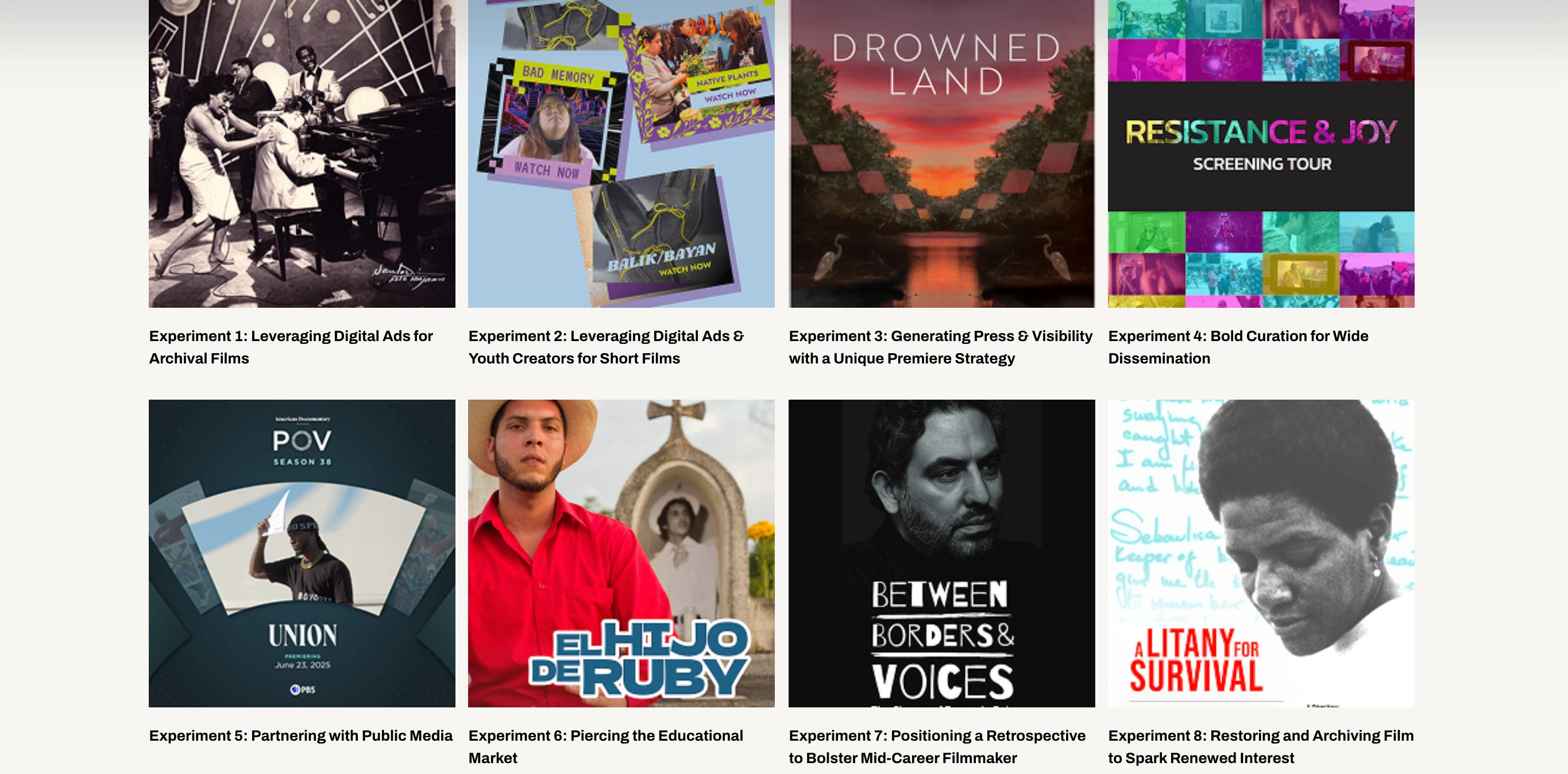
From February 2025 to February 2026, the Color Congress Elev8Docs initiative, led by co-executive directors Sahar Driver and Sonya Childress, staged eight marketing experiments across 27 member-nominated films, from four-minute shorts to landmark features more than a quarter-century old. The experiments drew on the deep experience of Distribution Advocates (a Color Congress member) and were directly designed for Color Congress by Distribution Advocates co-founders Karin Chien and Carlos Gutiérrez.
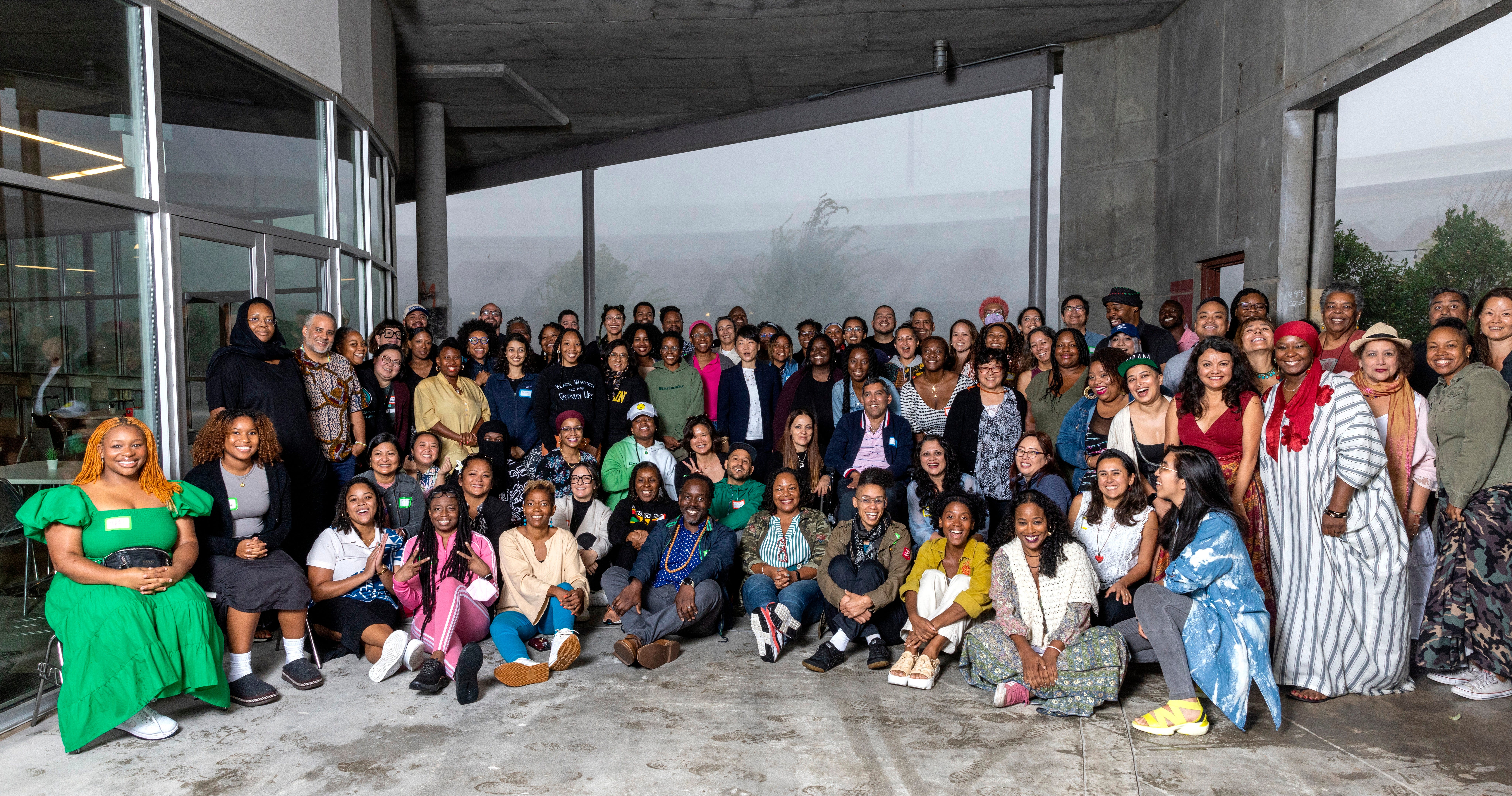
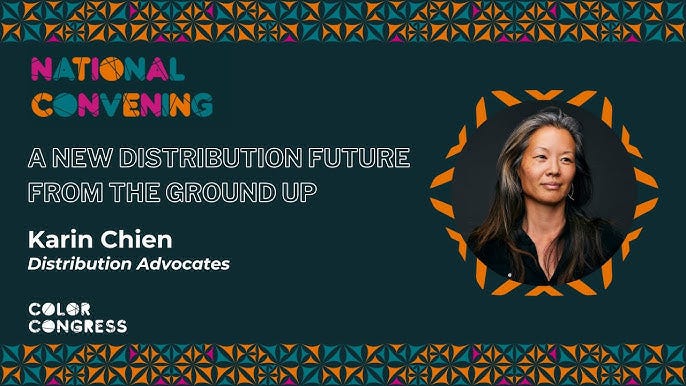
As an independent producer and co-founder and president of dGenerate Films, the longstanding distributor of independent Chinese films, Karin built some of the field’s first support structures that didn’t yet exist—an AAPI filmmaker mentorship program with the Center for Asian American Media, an artist residency for independent producers at the Nevada City Film Festival—and delivered the keynote at Color Congress’s first national convening in 2023, where the members voted on the funding initiative that became Elev8Docs.
Karin designed the initial Elev8Docs experiments with fellow Distribution Advocates co-founder Carlos Gutiérrez, co-founding executive director of Cinema Tropical, the leading promoter of Latin American cinema in the U.S. He also occupied a singular position with Elev8Docs. After the design and proposal phases, with Cinema Tropical, Carlos implemented one of them—a decentralized New York retrospective of the Mexican American filmmaker Bernardo Ruiz.
I convened the three of us after the Elev8Docs case study compendium was published, to discuss how you design a program meant to spark experimentation rather than prescribe a solution and what counts as a learning when so much of the work is operational. At the end, I issue a provocation on whether the field’s growing appetite for case studies might be quietly teaching our peers to copy rather than to risk. This conversation has been edited for length and clarity.
Abby Sun: I’d like to start with how this project came to be—going back before the founding of Color Congress and our joining it as Distribution Advocates. Both of you have designed programs before: fellowships, residencies, all of Cinema Tropical as a kind of ongoing program. How do you first identify the problem?
Carlos Gutiérrez: In this case there was a very specific context. The Color Congress membership voted, and the collective distribution marketing experiment [which became Elev8Docs] was the winning project. When I saw that, and the funding behind it, I thought there was a lot at stake—particularly because Sahar and Sonya, who are amazing, come more from the impact side. So I thought it was a big risk for the organization to commit all that funding and time to experiments they weren’t sure how to enact.
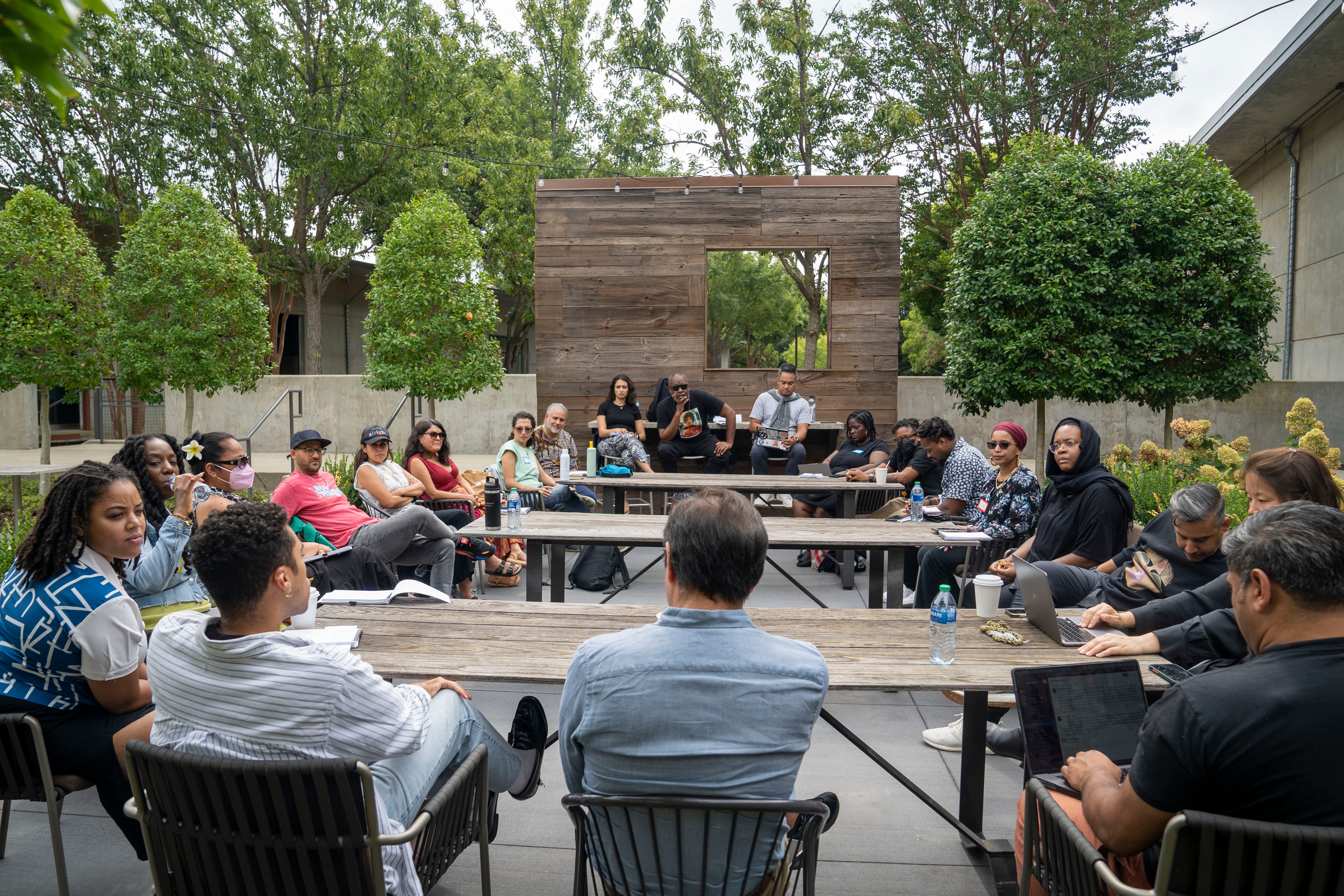
One advantage of Cinema Tropical is that we’re a very fluid organization—we work in distribution, programming, and publicity, in different capacities. This was also a chance to give more structure to experiments we’d already been doing for years. Karin and I went to Sahar and Sonya and offered to help give the experiments structure. It was a very specific opportunity, and a specific risk.
Karin Chien: The programs I’ve designed all came from the same place: something didn’t exist, and it was a need I could identify. Now we have this vocabulary around “gaps.” Before I knew that word, that’s what I was doing—filling gaps.
Color Congress was different, because the need was already identified. And we’d already done a lot of R&D with Amy Hobby, backed by the Perspective Fund, for Distribution Advocates. The raw source of both FilmADE and Elev8Docs design was the conversations at our first Distribution Advocates retreat, in the fall of 2022. That was the same moment Color Congress held its first national convening—the largest-ever gathering of leaders of color in nonfiction. They gave me the privileged spot of the keynote, because they wanted it to be about distribution.
Sonya and Sahar talked to us a lot about how important it was for the design to serve all the members, but more importantly to encourage collaboration between them. That went many layers down, including Carlos and me getting to work together.
Sonya and Sahar talked to us a lot about how important it was for the design to serve all the members, but more importantly to encourage collaboration between them.
Abby Sun: I reviewed the experimental design proposal you wrote for Elev8Docs. The design you created has multiple constituencies—audiences, but the targeted beneficiaries are also the filmmakers whose films were selected and the member organizations. It is sequenced by how old the film is. There are four cohorts by age: archival films over fifteen years old, the kind that would be called revivals or repertory; older films in that strange in-between—no longer new, but not yet at a ten-year anniversary; new releases under two years old; and upcoming titles, where the question is what you can do to prepare a film you’re currently working on. We tend to think distribution is for newly released films. Why does the age of the film matter here?
Carlos Gutiérrez: It was a chance to upend traditional values in distribution. The whole system is built for newer films—the festival circuit validates them, and then they get the structure to circulate. This was an opportunity to upend that, to give chances to films regardless of age, whether they’d been validated or not. And it was playful. Suddenly we could give chances to films that were ten years old or more, which seemed like a good way to experiment.
Karin Chien: Carlos and I understand the innate value of these films across the membership, new or old. The heart of it, to me, is a question of sustainability. There needs to be some kind of validation—market validation or career recognition. We weren’t trying to prove market value or revenue for its own sake. We were thinking about how an experiment could reveal a different path forward than the single path of validation most independent filmmakers are pushed toward. We wanted that question answered for all kinds of filmmakers, younger and more experienced. That shaped the range of film ages too.
The heart of it, to me, is a question of sustainability. There needs to be some kind of validation—market validation or career recognition. We weren’t trying to prove market value or revenue for its own sake.
Abby Sun: The experiments are also grouped by a diversity of distribution goals, or different kinds of validation. Some are traditional quantitative metrics—revenue, audience demographics, audience numbers. But others are harder to measure: getting a film back into circulation through restoration and archiving, career leverage, critical discourse. How were you imagining those being measured, and why are they critical to pull out?
Carlos Gutiérrez: It goes back to the first Distribution Advocates retreat, where we discussed success at length. One of the biggest urges in all of this is rethinking what success means. The most common metric is monetization—we judge films by box office, by how much money they made. Just thinking in other terms was already subverting the traditional realm. So we tried to come up with different ways to rethink the goals of each experiment, and built the metrics of success from there. Some are harder to measure, yes. But challenging the idea of success was the point.
Karin Chien: We had three years at Distribution Advocates advocating for and hearing from filmmakers, and some of these experiments were designed around the challenges we kept hearing. There was a PBS-oriented experiment because filmmakers told us, repeatedly, how hard it was to understand how to pair more traditional opportunities—an ITVS contract, a PBS broadcast—with everything else. That was less about monetization and more about making two things work together, so that if they figured it out, it might help others in the same position.
Abby Sun: A diversity of distribution platforms was designed in, and so was collaboration. The collaboration was not only between member organizations, but with service providers and the larger distribution infrastructure. No new distribution company was created for these experiments. They were designed to sit within the current systems and push on them. But in a true experiment, when you change something, you also design a baseline to compare those results against—a placebo, or a control. How different, really, was what you designed from the norm?
No new distribution company was created for these experiments. They were designed to sit within the current systems and push on them.
Karin Chien: I’d take a different tack. One question is how you actually spark innovation, and that’s hard to answer. But at the core—and this ties back to sustainability—we were trying to create an infrastructure for shared learning. If Elev8Docs created that, it’s incredible, because it lays the ground for a different mindset toward experimentation. The field has enormous creativity; that’s obvious. Our task was to spark it in this particular space, which is extremely opaque and challenging for filmmakers.
To pull it back to FilmADE: I think we succeeded in creating a shared infrastructure for learning. If nothing else, we injected transparency into an otherwise opaque system, and now there are more distribution case studies than you can run away from. There’s value in that, because it’s what you need to get to a more flexible mind—one that can experiment and innovate. I always quote Carlos, who said at the very beginning of Distribution Advocates: “We need many solutions.” We just need more solutions. How do you get people to start working on them?
Carlos Gutiérrez: There’s a lot of creativity in our field, but we’re also carrying a lot of inertia, especially in distribution and exhibition. A lot of this was about challenging that inertia and playing with elements that, in a traditional setup, are very hard to play with. And, importantly, doing it with a budget. Some of these experiments were based on things we’d already tried at Cinema Tropical, but with no budget. Working with a larger budget mattered—for documenting the process, and creating different paths and solutions.
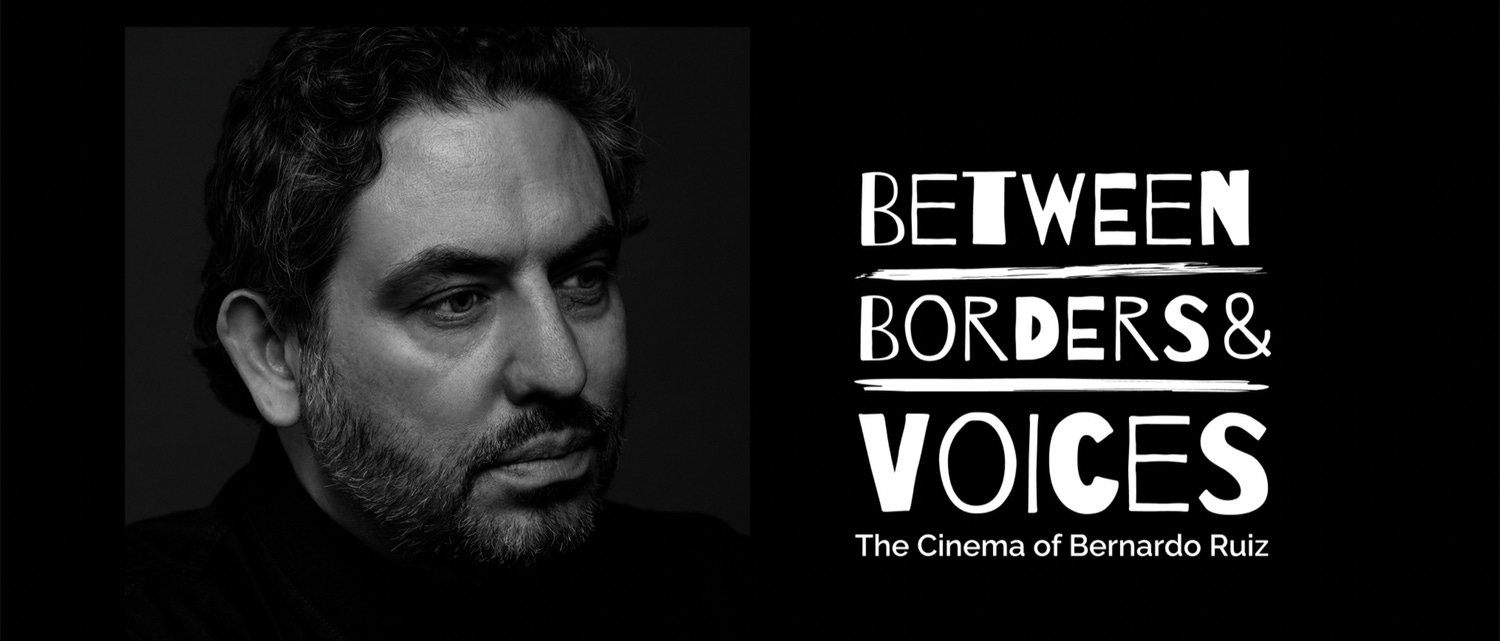
Abby Sun: I’d like to drill into the Bernardo Ruiz retrospective, which is one of the trickier experiments. In theatrical exhibition, the assumption is there’s a market for older films and restorations, and a market for newer films—but this in-between, a retrospective of a filmmaker that isn’t pegged to the usual marketing hooks, is something we’d normally shy away from. This is the experiment you applied for and implemented with Cinema Tropical. Did that playful, experimental quality show up in the implementation?
Carlos Gutiérrez: One playful element was the idea of the auteur, which is still so hegemonic—who has the right to be an auteur? Positioning a filmmaker who hasn’t been validated, a Mexican American filmmaker of color who’s created such an important body of work, challenges that.
The whole system is built for newer films—the festival circuit validates them, and then they get the structure to circulate. This was an opportunity to upend that, to give chances to films regardless of age…
The second part asks who has the right to a retrospective? Traditionally it’s one arthouse or one cinematheque that confers one. So the other playful part was celebrating a filmmaker across different organizations and venues, bringing validation from different people and geographically, too. We had screenings in Manhattan, Queens, and Brooklyn; originally we wanted Staten Island and the Bronx, but couldn’t confirm venues. Still, it was a very decentralized retrospective. Those were the two elements my team and I had the most fun with.
Abby Sun: What were the internal learnings within Cinema Tropical?
Carlos Gutiérrez: That more budget doesn’t necessarily expand the scope of the work. We had more budget for publicity [compared to other projects we take on], but generated roughly the same press coverage we usually generate with smaller budgets. We learned that it’s more about the creativity of building a larger team and bringing in in-kind resources, which is how we traditionally work. The other learning is that it’s harder to plan than you’d think, even with lead time—we ended up confirming some details only a month before. Production times have changed; everything has become more immediate.
Abby Sun: Maybe it’s harder to plan when you’re working with many partners rather than one.
Carlos Gutiérrez: For sure. Confirming some venues took a long time.
One more thing that was a learning for me: the impact a retrospective has on the filmmaker. I was blown away by its effect on Bernardo. We’re always on the other side, so seeing how it affected him, and how it will affect his future work, was a variable I hadn’t considered.
Most of these directors are also their own producers, so for him it was liberating to have a group of people working for him, organizing events for him. There’s also the insight he gained. Filmmakers are so tied to making their work that they don’t have the space to reflect on it—they’re focused on the next film. The retrospective gave him a moment to reflect on his themes, his aesthetics, how he makes films. And it wasn’t only him; it was audiences, moderators, and the press coverage telling him the value of his work. The third part is that at the UnionDocs event he showed a clip from his new project, so he started building critical dialogue around that film while it’s still in process.
Abby Sun: The Elev8Docs report points to Bernardo’s presence as crucial to the experiment’s success—and it worked both ways. He committed to being there, which drew audiences, and being there let him benefit from them. Going back to the larger question: how do you think about what counts as a learning, as opposed to what’s operational?
Karin Chien: The operational challenges of Elev8Docs were something we weren’t in a position to solve, which was a unique place to be. Every program I’d designed before, I also implemented—that was natural, with a producer’s sense of what’s possible within a budget or timeline. This was different, because Color Congress’s core values are collaboration and collectivism among its member orgs. I was always aware of not wanting to put too much of a thumb on that scale. The working group is a consensus process, and for Color Congress, collaboration is itself the outcome. That’s the point of it.
So we could design a program, but it had to be implemented within a larger infrastructure of member consensus, participation, and execution. Carlos and I designed the experiments, but Sonya and Sahar designed the process by which films were nominated, voted on, and chosen—and which film is in an experiment gravely affects how it’s implemented. We played a small role on the operational side; other committee members weighed in much more. You can see quite a bit of change between how some experiments were designed and how they were implemented. The compendium has been publicly available for a month or two, and it will be valuable for Color Congress to have time to reflect internally on the process going forward. Where do we take this going forward?
Abby Sun: Turning that back on ourselves as Distribution Advocates—I’ve realized recently that case studies are interesting partly because of how they get used. In the ones we publish, we try to focus on the pain points, data, pivots, and evaluation. But many case studies—including some of our own—get propped up as “a success,” when I wouldn’t always call the whole thing a success. And then people try to copy them rather than experiment. Is this also an effect that can be designed for?
Carlos Gutiérrez: There are no formulas here. Case studies aren’t formulas; they’re experiments—different ways to break the inertia, to find your own path. Each film is different and needs different tools, tools filmmakers often aren’t aware they have. Case studies serve to diversify the tools we have to create paths for a film, and to rethink and own the idea of success. But in the film world it’s so easy to say, this worked, let’s replicate it as a formula. There’s no magic formula, no one-size-fits-all. That’s another inertia we have to fight.
There are no formulas here. Case studies aren’t formulas; they’re experiments—different ways to break the inertia, to find your own path.
I see a mirror to film production. The films that really work are the ones that break the norm—but nobody supports them, precisely because they go against the norm. Once they break through, they become part of a canon you’re then supposed to follow. The system, for the most part, doesn’t allow for experimentation; once something works, it becomes the norm. How do we create more fluid systems that don’t punish experimentation—in production, and in distribution?
Abby Sun: What have we learned about designing programs?
Karin Chien: I don’t have a cohesive answer, but I have a list. One: program design needs resources. Sahar and Sonya had done the amazing work of raising a blind fund, so there was already funding for Carlos’s and my time, and Distribution Advocates helped with overhead. Two, on the same hand: constraints are important. Understanding the constraints was a big factor in how we shaped the experiments. Three: diverse and informed points of view. Carlos and I have done this work for years, in different parts of the same distribution-and-exhibition space, and a practice-informed perspective really matters in design. Four: a willingness to stop perfecting it and just go try it. At some point you have to stop designing and do it. And five: program design needs iteration.
That’s what I wanted to dig into at the funder roundtable. Distribution Advocates created something far less designed than Elev8Docs, but FilmADE went out and did something nobody else was doing, and maybe de-risked it for the field. Then the field took that simple design and iterated, and iterated. Those iterations are what interest me. Maybe that’s the truest sense of a collective distribution project: the field collectively iterating on a design.
Carlos Gutiérrez: It’s a privilege to challenge our own everyday lives—we’re so busy in our trenches, and having these chances to compare notes, be creative, be playful, goes against the inertia of the system. I hope we can keep protecting these spaces. Hopefully there will continue to be budget, but even if there isn’t, the spaces themselves are so important for building partnerships and finding new ways to work with people in different structures and contexts.