Distribution Predictions for the Year of the Fire Horse
Seven Wishes from our Film-ADE Grantees for the Lunar New Year.
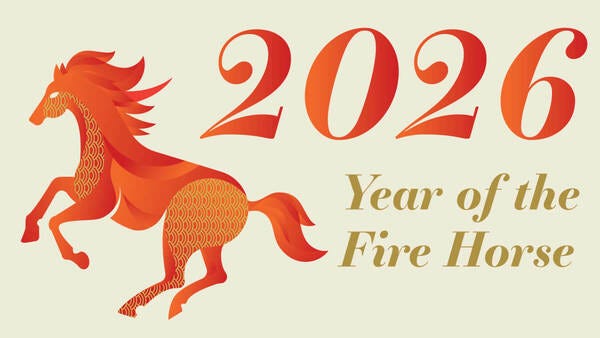
Happy Lunar New Year and Ramadan Mubarak! On the Chinese calendar, today is the start of the year of the Fire Horse signifying a rare, 60-year cycle that represents intense energy, rapid change, and bold transformation. It merges the Horse’s traits of strength and freedom with the Fire element’s passion and innovation, driving high-stakes action and leadership, but also potential conflict or burnout.
In her recent Los Angeles Times article, Ada Tseng notes, “The last Year of the Fire Horse year was 1966. The Vietnam War was escalating. The civil rights movement was at a crossroads. The Black Panther Party was founded. And the year marked the beginning of the Cultural Revolution in China. If 1966 is any blueprint, we can expect a breakdown of long-accepted hierarchies and systems of authority.”
In honor of the Fire Horse, we asked our Film-ADE grantees what bold transformations they would like to see in independent film distribution and exhibition in 2026 whether wildly imaginative, or wildly pragmatic. Here are their wishes for 2026.
Engage Audiences During Production – Samantha Curley, Level Ground Productions. Film-ADE Case Study for the film UNION.
On the pragmatic level, I’d love to see budget templates and financing plans built and shared for independent distribution and exhibition (separate from production budgets). I’d also love to see filmmakers find and connect to their audiences much earlier in the filmmaking process (like during production) and work with community and distribution partners throughout production and not just exhibition.Curate Repertory Cinema for Documentaries – Daniel Cantagallo, Cargo Films & Releasing. Film-ADE Case Study for the film NEVERMORE.
Recurring fantasy, but worth saying out loud: fund more storytellers and support independent distributors instead of surveillance and reckless enforcement (ICE now has, what, $85B at its disposal?). Redirect even a fraction of that into cultural infrastructure—production, marketing, and distribution support that you see in other countries—and indie distribution might stop feeling like triage.
I’d also love to see a deeper, curated repertory cinema movement for documentaries. One that treats nonfiction as essential cinema. Pieces of this already exist at cinematheques, museums, and arthouses, but without enough scale, structure, or sustained commitment. Maybe it’s public–private–brand funded? Start with National Documentary Day, then expand it into a year-round program of preservation, re-releases, and curated runs. That kind of collaboration between multiplexes, arthouses, and distributors, could contextualize films alongside their lineage, build appreciation for top-tier nonfiction storytelling and filmmakers, and help grow an audience movement that also benefits new releases. Not more content. More discovery, more memory, more meaning around the greatness of nonfiction.More Infrastructure, Fewer Gatekeepers – Dan Levy Dagerman, Two Hands Productions. Film-ADE Case Study for the film You, Me & Her.
In 2026, I’d love to see independent film distribution become less about gatekeepers and more about infrastructure. Instead of chasing permission, filmmakers should be able to upload a finished film, see exactly where their audience lives, book theaters directly, sell tickets to their own fans, and track revenue transparently in real time, like Shopify or Eventbrite, but for theatrical. Exhibition should feel more like live events, with Q&As, community partnerships, and experiences that make going to the movies feel special again. Wildly imaginative or wildly pragmatic, the goal is the same: give filmmakers ownership over their audience and their data. Once we control that relationship, everything else, financing, marketing, and sustainability, gets a whole lot easier. 2026 should be the year we stop asking for permission and start building the systems we actually need.Accessibility in Distribution Tools – Colleen Cassingham, Multitude Films. Film-ADE Case Study for Life After coming spring 2026.
Fully-working accessibility features across direct distribution tools—as a norm for all films rather than something we have to advocate for on a case by case basis.A Lot More Data Sharing – Sarah Mosses, Together Films. Film-ADE Data Transparency Project coming soon.
Greater data sharing between stakeholders to ensure that the full audience reach and commercial performance of each title is celebrated, from the first festival screening, theatrical premieres, hundreds of community events, and to the VOD numbers on streaming. Rights holders deserve to know how their films are being seen, engaged with and monetized, from first exploitation to the last.
In the UK, we have 2 primary membership organisations that operate to encourage data + information sharing: Film Distributors Association (FDA) and FilmExport (for sales agents). It would seem that modelling the structure of these 2 organisations could be useful for further sector wide support. For example, the FDA keeps a running calendar of every new release, and helps to coordinate week of release press screenings. Something that the U.S. independent sector could find most useful.Patrons for Distribution – James Shani, Rich Spirit. Film-ADE Case Study on the film BLKNWS: Terms & Conditions coming spring 2026.
I’d like to see innovation across funding models for the distribution of films, particularly tied to patrons and benefactors being more closely included in the release/exhibition of a picture, in the same way that patrons support an art exhibition, museum, or even a film festival.Redefine Success – Jessica Edwards, Film First. Film-ADE Case Study for the film Eno.
*Create new success metrics for independent films that aren’t based on box office or awards, and that recognize the real labor, ingenuity, and long-term audience-building it takes to get a film to release.
*Expand independent film press coverage to meaningfully include distribution and exhibition stories, and build relationships with major media groups (like Penske) that make them genuinely excited to cover “smaller” wins and independent release strategies.
*Make it significantly easier for distributors and filmmakers to reach independent exhibitors for niche releases, with better access, clearer pathways, and less reliance on personal networks and cold outreach.
The work of Film-ADE continues into the year of the Fire Horse with four exciting new deep dives into film release experiments in our publishing pipeline. As we shine a light on innovation and transparency for our field, we look to all of you to grow our learnings into a more resilient ecosystem. We can’t wait to see what bold transformations 2026 will bring.
Thanks to JustFilms | Ford Foundation, Perspective Fund, and Linlay Productions for supporting our activities.
Love it!!! Hope the fire horse takes my little film somewhere 🎠